

MIT-WPU Solar Thermal Battery Stores Sunlight and Delivers Hot Water After Sunset
MIT-WPU Solar Thermal Battery Offers a Sustainable Solution for Round-the-Clock Hot Water

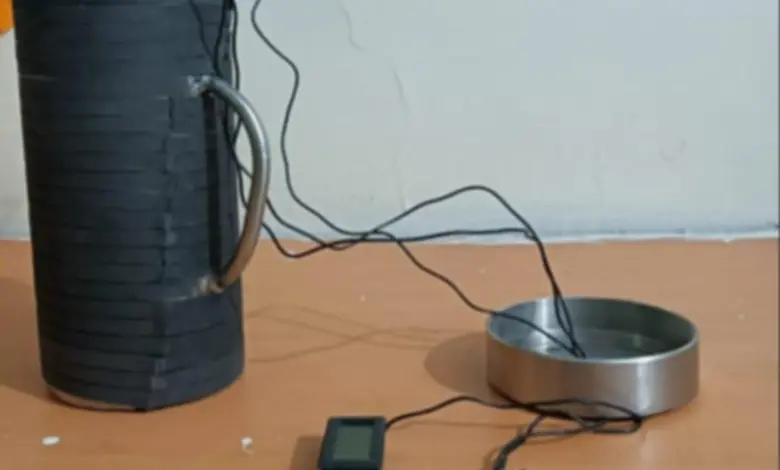
Pune | June 27, 2026 : Researchers at MIT World Peace University (MIT-WPU) have developed an innovative MIT-WPU Solar Thermal Battery that stores solar heat and supplies hot water long after sunset. The breakthrough addresses one of the biggest challenges of solar energy—its dependence on sunlight—and could reduce the use of electricity and fossil fuels for water heating.
The technology was developed by Dr. Anita Nene and Dr. Rohit Ghadge from the Department of Mechanical Engineering at MIT-WPU. It combines a Scheffler solar concentrator with a phase change material (PCM)-based thermal battery to store heat efficiently for later use.
The innovation has reached Technology Readiness Level (TRL) 7, making it ready for pilot deployment in real-world conditions.
What Is the MIT-WPU Solar Thermal Battery?
A Smart System That Stores Heat Instead of Electricity
Unlike conventional solar energy storage systems that depend on lithium-ion or electrochemical batteries, the MIT-WPU Solar Thermal Battery stores energy directly as heat.
The system uses paraffin wax, a phase change material (PCM), which absorbs and stores thermal energy when exposed to concentrated sunlight. Later, the stored heat is released gradually to provide hot water even after the sun goes down.
The design includes:
- Scheffler solar concentrator
- PCM-based thermal storage capsule
- Detachable PCM tube
- Water-jacket heat transfer system
- Polyurethane insulation for better heat retention
This simple yet effective design improves energy efficiency while reducing heat loss.
How the Technology Works
Fast Charging and Long Heat Retention
The researchers designed the system to capture solar heat quickly and release it over an extended period.
Laboratory testing delivered impressive results:
- Complete thermal charging in approximately 18 minutes
- Complete discharge in approximately 32 minutes
- Thermal storage capacity of 1.5 to 2 kWh
- Hot water temperature maintained between 50°C and 60°C
- Heat availability for up to 14 hours after charging
Even after sunlight was removed, the system continued delivering hot water, proving its ability to store and reuse solar energy effectively.
Major Benefits of the MIT-WPU Solar Thermal Battery
Lower Energy Bills and Reduced Carbon Emissions
The MIT-WPU Solar Thermal Battery offers several environmental and economic advantages.
Reliable Hot Water After Sunset
Users can access hot water even during the night without relying on electricity.
Lower Electricity Consumption
The system reduces dependence on electric water heaters, helping households and institutions save energy.
Reduced Carbon Footprint
Researchers estimate that each installation could lower carbon emissions by approximately 2.5 to 3 tonnes every year, supporting India’s clean energy goals.
Sustainable Energy Storage
Since the system stores heat directly, it avoids the complexity and environmental concerns associated with conventional batteries.
Researchers Explain the Innovation
Focus on Affordable and Sustainable Energy
Speaking about the project, Dr. Anita Nene said the team wanted to overcome one of solar energy’s biggest limitations—its availability only during daylight hours.
According to her, the objective was to develop a simple, cost-effective, and sustainable thermal storage system that could store solar energy and make it available whenever needed.
Dr. Rohit Ghadge added that thermal energy represents a significant share of global energy consumption. Therefore, efficient solar heat storage technologies can reduce dependence on conventional fuels, improve energy security, and accelerate the transition to cleaner energy systems.
Advanced Research Backed the Technology
CFD Simulations Validated the Design
To ensure reliable performance, the researchers combined Computational Fluid Dynamics (CFD) simulations with laboratory-scale testing.
The simulations helped optimize heat transfer, improve thermal efficiency, and validate the system’s overall performance before moving toward pilot deployment.
This scientific approach increases confidence in the technology’s commercial potential.
Wide Range of Real-World Applications
Technology Can Benefit Homes, Hospitals and Industries
The MIT-WPU Solar Thermal Battery has the potential to serve multiple sectors.
Possible applications include:
Residential Buildings
Reliable hot water for homes while reducing electricity bills.
Hotels and Hospitals
Continuous hot water supply with lower operating costs.
Educational Institutions and Hostels
Energy-efficient water heating for large campuses.
Community Kitchens
Sustainable hot water for cooking and cleaning operations.
Industrial Process Heating
Thermal energy for manufacturing and industrial processes.
Agriculture
Support for rural processing units and agricultural operations.
Off-Grid Communities
Clean energy solutions for remote villages with limited electricity access.
Patent Filed, Commercial Deployment Planned
Technology Moves Towards Market Readiness
The research team has filed an Indian patent application titled “Solar Energy Storage Capsule Using Phase Change Material” under Application No. 202521118546.
The project is now entering the next phase of development.
Researchers are actively exploring collaborations with industry partners for:
- Pilot installations
- Performance optimization
- Large-scale manufacturing
- Commercial deployment
The upcoming field trials will evaluate the technology under real operating conditions before wider adoption.
Why This Innovation Matters
Supporting India’s Clean Energy Mission
India continues to expand its renewable energy capacity. However, storing solar energy efficiently remains a major challenge.
The MIT-WPU Solar Thermal Battery provides a practical solution by making solar heat available long after sunset. This innovation can reduce dependence on fossil fuels, lower electricity consumption, and improve energy efficiency across residential, commercial, and industrial sectors.
As India works toward achieving its climate and sustainability targets, affordable thermal storage technologies like this could become an important part of the country’s clean energy future.
The MIT-WPU Solar Thermal Battery represents a significant advancement in renewable energy storage. By combining a Scheffler solar concentrator with a PCM-based thermal battery, researchers have created a system that delivers hot water for up to 14 hours after sunset while reducing electricity use and carbon emissions.
With a patent filed, TRL 7 readiness achieved, and pilot projects on the horizon, the innovation has the potential to transform water heating systems across homes, institutions, industries, and rural communities. If commercialized successfully, it could play a vital role in supporting India’s transition toward a cleaner and more sustainable energy ecosystem.