
Tripura to Receive AI-Enabled Portable X-Ray Machines, MRI Scanners and Digital Mammography Systems to Strengthen Healthcare
Tripura Signs Landmark MoU with Centre to Modernize Diagnostic Healthcare

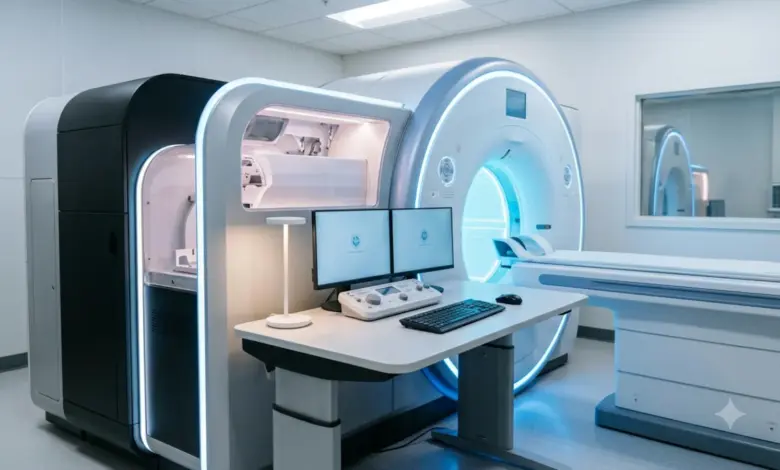
In a major boost to healthcare infrastructure, the Government of Tripura has signed a Memorandum of Understanding (MoU) with the Union Ministry of Health and Family Welfare to deploy AI-enabled portable X-ray machines, MRI scanners, and Digital Breast Tomosynthesis (DBT) mammography systems across the state.
The initiative, funded through the Prime Minister’s Fund, aims to improve access to advanced diagnostic services, especially in rural and underserved regions. It is expected to strengthen early disease detection, reduce diagnostic delays, and improve healthcare outcomes for thousands of patients.
What the Agreement Includes
Under the agreement, Tripura will receive:
- 48 AI-enabled portable handheld X-ray machines
- Three 1.5 Tesla MRI scanners
- Three Digital Breast Tomosynthesis (DBT) mammography systems
These advanced diagnostic systems will be installed in district hospitals located in:
- Dhalai
- North Tripura
- Gomati
The deployment will significantly improve diagnostic capabilities in districts that currently have limited access to advanced imaging facilities.
Why AI-Enabled Portable X-Ray Machines Matter
The introduction of AI-enabled portable X-ray machines marks a major technological upgrade for public healthcare.
Unlike conventional X-ray systems, AI-assisted portable devices offer:
- Faster image acquisition
- AI-assisted image interpretation
- Point-of-care diagnosis
- Easy transportation to remote villages
- Reduced waiting time for patients
Doctors can use these machines inside emergency rooms, community health centres, mobile medical units, and even during disaster response operations.
This technology allows healthcare workers to identify abnormalities much earlier, improving treatment outcomes.
MRI Scanners Will Improve Advanced Diagnosis
The three new 1.5 Tesla MRI scanners will greatly enhance the state’s ability to diagnose complex diseases.
MRI technology plays an essential role in detecting:
- Brain disorders
- Stroke
- Spine injuries
- Joint problems
- Heart diseases
- Cancer
- Soft tissue abnormalities
Patients who previously travelled outside their districts for MRI scans may soon receive these services closer to home.
Digital Mammography to Strengthen Breast Cancer Screening
Tripura will also receive three Digital Breast Tomosynthesis (DBT) Mammography Systems, one of the most advanced breast cancer screening technologies available today.
Compared with traditional mammography, DBT provides:
- Three-dimensional breast imaging
- Better detection of small tumors
- Lower false-positive rates
- Earlier cancer diagnosis
- Improved screening for women with dense breast tissue
Health experts believe early diagnosis significantly improves survival rates among breast cancer patients.
Rural Healthcare Gets a Major Boost
One of the biggest advantages of the project is its focus on rural healthcare.
Many villages in Tripura face challenges such as:
- Limited diagnostic facilities
- Shortage of radiologists
- Long travel distances
- Delayed diagnosis
Portable AI-powered imaging systems will help bridge these gaps by bringing modern diagnostics directly to patients.
Healthcare workers can perform imaging closer to the patient’s location, reducing both travel costs and treatment delays.
Centre and State Working Together
The MoU was signed between the Union Ministry of Health and Family Welfare and the Tripura Health and Family Welfare Department.
The agreement covers:
- Supply of equipment
- Installation
- Operational support
- Infrastructure development
- Training of healthcare personnel
- Maintenance and annual inspections through March 2036
The long-term maintenance plan aims to ensure uninterrupted operation of these advanced diagnostic systems.
Artificial Intelligence Will Improve Diagnostic Accuracy
Artificial Intelligence is rapidly transforming medical imaging across the world.
AI algorithms can assist radiologists by:
- Detecting abnormalities faster
- Highlighting suspicious findings
- Improving reporting accuracy
- Reducing diagnostic errors
- Supporting clinical decision-making
While doctors remain responsible for final diagnoses, AI acts as a powerful decision-support tool that enhances efficiency and consistency.
Better Care for Multiple Diseases
The new imaging equipment will support early diagnosis of numerous medical conditions, including:
Cancer
Early screening can improve treatment success and survival.
Tuberculosis (TB)
Portable X-ray systems can help detect lung infections quickly, particularly during community screening drives.
Heart Diseases
MRI technology helps identify structural and functional heart abnormalities.
Neurological Disorders
MRI scans assist doctors in diagnosing strokes, brain tumors, epilepsy, and spinal disorders.
Trauma Cases
Portable imaging allows rapid diagnosis of fractures and internal injuries in emergency situations.
Long-Term Monitoring and Maintenance
According to the agreement, the machines will undergo:
- Regular technical inspections
- Preventive maintenance
- Software updates
- Performance monitoring
- Annual servicing
This approach aims to keep the equipment functional throughout its operational life and ensure reliable healthcare services for patients.
Aligning with India’s Digital Health Vision
The initiative complements India’s broader digital health transformation.
The Centre has increasingly focused on:
- AI-powered healthcare
- Digital diagnostics
- Strengthening district hospitals
- Improving rural healthcare access
- Modern medical infrastructure
- Early disease detection
Experts believe technology-enabled healthcare can reduce regional disparities while improving patient outcomes across the country.
Expected Benefits for Patients
The project is expected to deliver several important benefits:
- Faster diagnosis
- Reduced travel for patients
- Earlier disease detection
- Better cancer screening
- Improved emergency care
- Enhanced diagnostic accuracy
- Greater healthcare access in remote areas
- Reduced burden on tertiary hospitals
These improvements could significantly strengthen Tripura’s public healthcare system over the coming years.
The deployment of AI-enabled portable X-ray machines, MRI scanners, and Digital Breast Tomosynthesis systems represents a significant step toward modernizing healthcare delivery in Tripura. By combining artificial intelligence with advanced diagnostic technology, the Centre and the state government aim to improve access to quality medical services, particularly in underserved regions.
With long-term maintenance, trained healthcare professionals, and enhanced diagnostic infrastructure, the initiative is expected to support early disease detection, strengthen district hospitals, and contribute to a more efficient and patient-centric healthcare system.
Also Read : Honda Motorcycle & Scooter India Q1FY27 Sales Rise 17% YoY, June 2026 Sales Jump 23%