
Power Changed, Credibility Remained: The Enduring Administrative Model of Navneet Kumar Sehgal
How performance-driven governance helped a career bureaucrat remain relevant across political regimes, from Uttar Pradesh to the Prime Minister’s policy framework

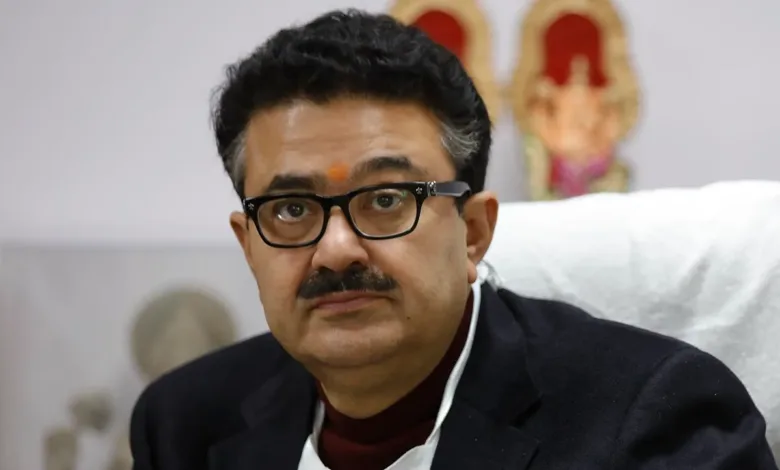
Lucknow: In Uttar Pradesh’s complex administrative landscape, very few bureaucrats manage to remain relevant across changing political regimes. Former IAS officer Dr. Navneet Kumar Sehgal stands out as one such rare example. His career reflects a governance model where performance, delivery, and institutional trust outweighed political shifts.
From the socialist era to Bahujan politics, from technocratic governance to a strong administrative framework, Dr. Sehgal’s credibility remained intact. Remarkably, his administrative philosophy continued to find acceptance even within Prime Minister Narendra Modi’s policy ecosystem, making his journey an exceptional case in Indian bureaucracy.
Sudden Resignation Triggers Political and Media Buzz
Dr. Navneet Kumar Sehgal, a retired IAS officer of the 1988 batch (UP cadre) and serving Chairman of Prasar Bharati, resigned unexpectedly on 2 December 2025. The Central Government accepted his resignation with immediate effect, issuing official orders shortly thereafter.
Dr. Sehgal had assumed charge as Chairman of Prasar Bharati in March 2024 and still had nearly one year remaining in his tenure. His abrupt exit, without a detailed official explanation, sent ripples through political and bureaucratic circles.
Given that Prasar Bharati oversees India’s public broadcasters—Doordarshan and All India Radio—the resignation was widely seen as a significant institutional development. The absence of clarity fueled speculation, debates, and intense media scrutiny.
Allegations, Political Reactions, and the Rumour Mill
The situation escalated after a digital news portal published allegations against Dr. Sehgal. He responded firmly by issuing a legal notice for defamation, rejecting the claims as baseless.
Following this, several smaller media platforms amplified rumours, contributing to confusion and misinformation. Notably, no official agency confirmed any wrongdoing.
Opposition parties, including the Congress, questioned the resignation. Congress spokesperson Pawan Khera, during a press briefing, alleged that the resignation followed a familiar pattern of political damage control linked to corruption claims. However, available information suggests that the report cited by opposition leaders lacked evidentiary backing and was eventually rejected as unsubstantiated.
In the absence of an official statement from either the government or Dr. Sehgal, speculation continued to dominate public discourse.
A Career Built on “Delivery First” Governance
Dr. Sehgal’s professional identity was never anchored to a political ideology. Instead, it was shaped by outcome-based governance, institutional systems, and execution discipline.
Throughout his career, he focused on transforming government policies into visible public outcomes. His approach combined communication, monitoring, and feedback into a unified administrative system.
Mulayam Singh Yadav Era: Grassroots Communication
While serving in the Information Department, Dr. Sehgal strengthened government outreach by using local languages, visual media, and regional networks. This helped welfare schemes reach villages effectively.
Mayawati Government: Discipline and State Branding
During this phase, he played a role in reforms related to power generation, water management, and urban waste systems. Uttar Pradesh achieved record electricity production, and urban cleanliness initiatives earned national recognition, including a Prime Minister’s Award. State-level cultural and official events were managed with strict timelines and transparency, laying the foundation of disciplined state branding.
Akhilesh Yadav Regime: Investment and Technocracy
Under the Akhilesh Yadav government, projects like expressways and metro rail gained momentum. The Invest UP framework was restructured with a modern outlook. Roadshows, single-window investor systems, and proactive policy communication positioned Uttar Pradesh as an investment-friendly state.
Yogi Adityanath Government: Global Outreach and Economic Image
In the Yogi Adityanath era, Dr. Sehgal was associated with Global Investors Summits, international roadshows, and large-scale cultural events. Uttar Pradesh’s image expanded beyond law and order to emerge as a hub of economic opportunities, backed by major investment proposals and employment roadmaps.
Alignment with the Modi Governance Model
Prime Minister Narendra Modi’s governance framework prioritizes delivery, branding, and system-building. Dr. Sehgal’s entire administrative journey revolved around these three pillars.
This alignment explains why, even after retirement, he remained active in central policy, investment promotion, and institutional leadership roles, including Prasar Bharati.
The Five Pillars of the “Sehgal Model”
- Turning Policy into a Public Brand
- Zero Tolerance for Delays in Delivery
- Distance from Politics, Proximity to Systems
- Acting as a Bridge Between Centre and States
- Building Ecosystems, Not Just Events
These principles ensured continuity, credibility, and adaptability across governments.
Four Governments, One Constant Trust
- Mulayam Singh Yadav: Grassroots information networks and public communication
- Mayawati: Disciplined state branding and administrative order
- Akhilesh Yadav: Investment promotion and technocratic governance
- Yogi Adityanath: Global investor platforms and large-scale economic events
An Unfinished Chapter
Dr. Navneet Kumar Sehgal’s resignation has raised more questions than answers. Yet, his administrative legacy remains intact. In an era where bureaucracy often mirrors political volatility, his career demonstrates how performance-driven governance can transcend power shifts.
Whether or not further clarity emerges, the “Sehgal Model” will continue to be referenced as a case study in sustainable administrative credibility.