
Why Loan Against Property Is India’s Financial Game-Changer ?
How Loan Against Property is transforming homes into financial leverage for households, MSMEs, and the Indian economy

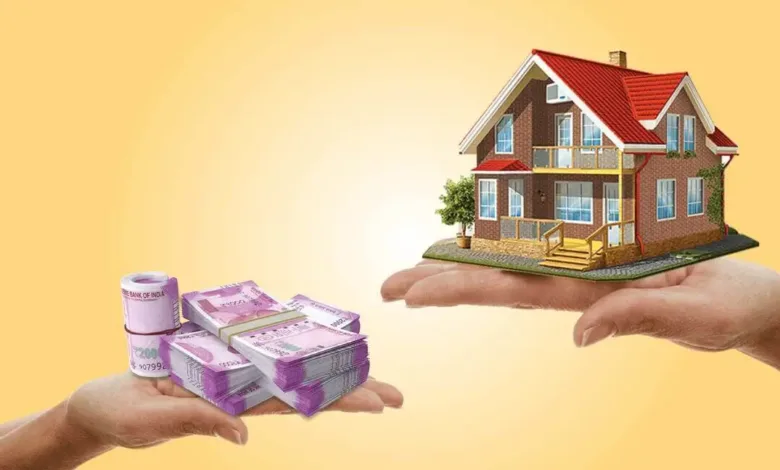

The dream of homeownership has always been the ultimate finish line for every Indian, rooted deeply in our cultural aspiration of “Roti-Kapda-Makaan.” For generations, a house was seen as a sanctuary of emotional and financial security—an asset to be protected and eventually passed down. However, we are now witnessing a profound evolution in this mindset. Today’s consumer no longer views their home as a static “dead” asset; they see it as a dynamic engine for financial leverage. This shift has placed Loan Against Property (LAP) at the center of India’s modern lending ecosystem. Lenders, including NBFCs, are strategically diversifying into non-housing secured products to balance portfolios, which has strengthened the position of LAP within the broader lending ecosystem. In FY25, property-linked loans, comprising home loans and LAP, formed the largest share of disbursals. Within this segment, large-ticket loans above one crore rupees accounted for 21% of total volumes, signaling a definitive preference for secured borrowing. The notable rise in home loan volumes and values, which grew by 10% and 15%, respectively, during FY25, further reinforces the expansion of property-backed credit.
A Market Expanding on Firm Fundamentals
Recent data indicate the depth and scale of this transformation. India’s LAP market reached USD 758 billion in 2024 and is projected to grow to USD 2,369 billion by 2033, with a compound annual growth rate of 13.5% between 2025 and 2033. This is not merely a metro phenomenon. The engine of this growth is increasingly powered by Tier 2 to Tier 4 cities, where MSME activity has accelerated and formal credit penetration has widened.
A Multi-Purpose Instrument for Households
Loan Against Property (LAP) is an increasingly preferred financing solution for Indian households seeking to meet large and long-term financial requirements by leveraging the value of their owned residential or commercial property. Designed to address diverse needs, LAP is commonly used for purposes such as overseas education, healthcare expenses, business or personal debt consolidation, weddings, and major home improvements, where traditional unsecured loans may be insufficient.. Furthermore, many families utilize LAP’s significantly lower interest rates—typically 12% to 18% %, compared to 16% to 28% for unsecured personal loans—to consolidate high-cost debts, creating one manageable, long-term structure. With loan sizes ranging from ₹5 lakh up to ₹10 crore and tenures of up to 15 years, LAP offers stability where it is needed most.
Strengthening MSME and Corporate Cash Flows
For the backbone of the Indian economy – the MSME sector – India has over 63 million MSMEs, which contribute significantly to GDP and employment, and many of these enterprises rely on secured financing options such as LAP due to ease of access and larger ticket sizes.Small and medium enterprises frequently use property-backed borrowing to meet working capital needs, fund machinery and technology upgrades or strengthen operational capacity. Many of these businesses operate in regions where property ownership is common, making LAP a natural financing avenue. Corporates too are increasingly leveraging LAP to stabilise cash flows, bridge temporary liquidity gaps, and avoid equity dilution. LAP enables them to access large amounts of capital while retaining strategic control, which is particularly valuable in cyclical or investment-intensive sectors.
The Digital Evolution of LAP
The narrative that a secured loan means a slow loan is obsolete. Digital transformation has reshaped both consumer expectations and industry processes. E-verification, digital valuation mechanisms and online disbursal systems have significantly reduced loan processing times, which historically extended across multiple weeks. Today, many lenders are able to complete the LAP journey within a few days. Fintechs and NBFCs are leading this change, prioritizing speed, transparency, and minimal documentation which are a non-negotiable for younger borrowers and first-generation entrepreneurs. The digital shift aligns with broader behavioural patterns of a country that lives and transacts on its mobile phone, making formal and secured credit more accessible and comfortable than ever before.
Policy Support and Responsible Growth
The policy environment is highly supportive, with measures like the increased deduction on home loan interest under Section 24(b) (to ₹3 lakh in Union Budget 2025) widening the base of eligible property owners. As property values appreciate, particularly in Tier 2 and Tier 3 cities, borrowing capacity increases, creating a powerful, self-reinforcing cycle. Crucially, this growth is being driven by responsible leveraging. Borrowers are informed, operating within clear frameworks like the SARFAESI Act, and adhering to healthy Loan-to-Value (LTV) ratios (around 70% for self-occupied residential property). This shared commitment to informed decision-making strengthens India’s credit culture, ensuring LAP remains a stable and sustainable option for the long haul.
A Cornerstone of India’s Evolving Credit Landscape
By 2025, LAP has established itself as a preferred financing mechanism for a wide range of borrowers, not just a specialised product. Its affordability, long tenure and unique ability to unlock the financial potential of existing property make it profoundly relevant in a country where real estate remains the cornerstone of household wealth. With continued digital adoption and policy tailwinds, LAP is perfectly positioned to serve as an integral bridge: For the Household, connecting aspiration with major personal goals; For the Entrepreneur, linking operational need with expansion; and For the Economy, tying built-up wealth to sustained national progress. LAP is enabling Indians to truly advance through the wealth they have already built, making their home the foundation of their future growth.